How to Cook Once and Eat All Week
You love home-cooked meals. You just don’t love spending two hours in the kitchen every single night after a full day of work. Sound familiar? That is exactly why the cook once and eat all week method has become a game-changer for busy families, solo diners, and anyone who wants to eat well without burning out.
This approach is not about eating the same boring leftovers for five days straight. It is about strategic planning, smart batch cooking, and clever ingredient repurposing. When you master this skill, you reclaim hours of your week and stop the 6 p.m. panic of “what’s for dinner?”
In this guide, I will walk you through every step of the process — from choosing the right recipes to storing food safely so it stays fresh. Whether you are a total newbie to meal prep or just looking to sharpen your routine, you will find actionable tips that actually work.
Why Cooking Once Changes Everything
Most people think cooking every night is the only way to get fresh, flavorful food. In reality, cooking in bulk two or three times per week delivers better results with far less stress. You save money by buying in larger quantities, reduce food waste by using ingredients across multiple meals, and free up your evenings for things that matter more.
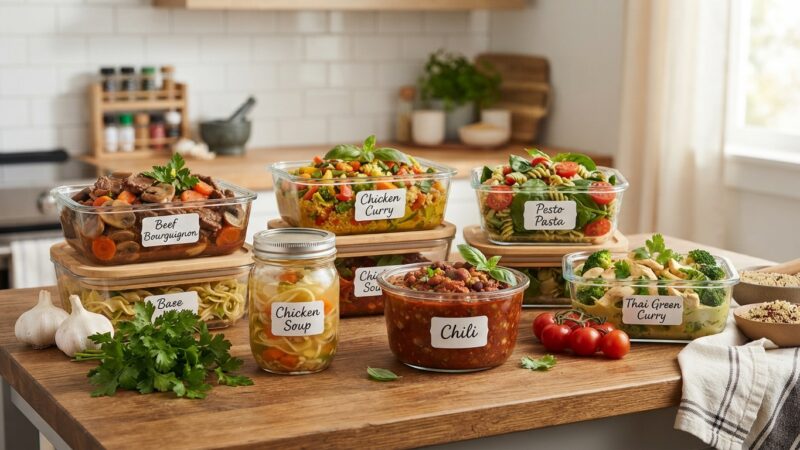
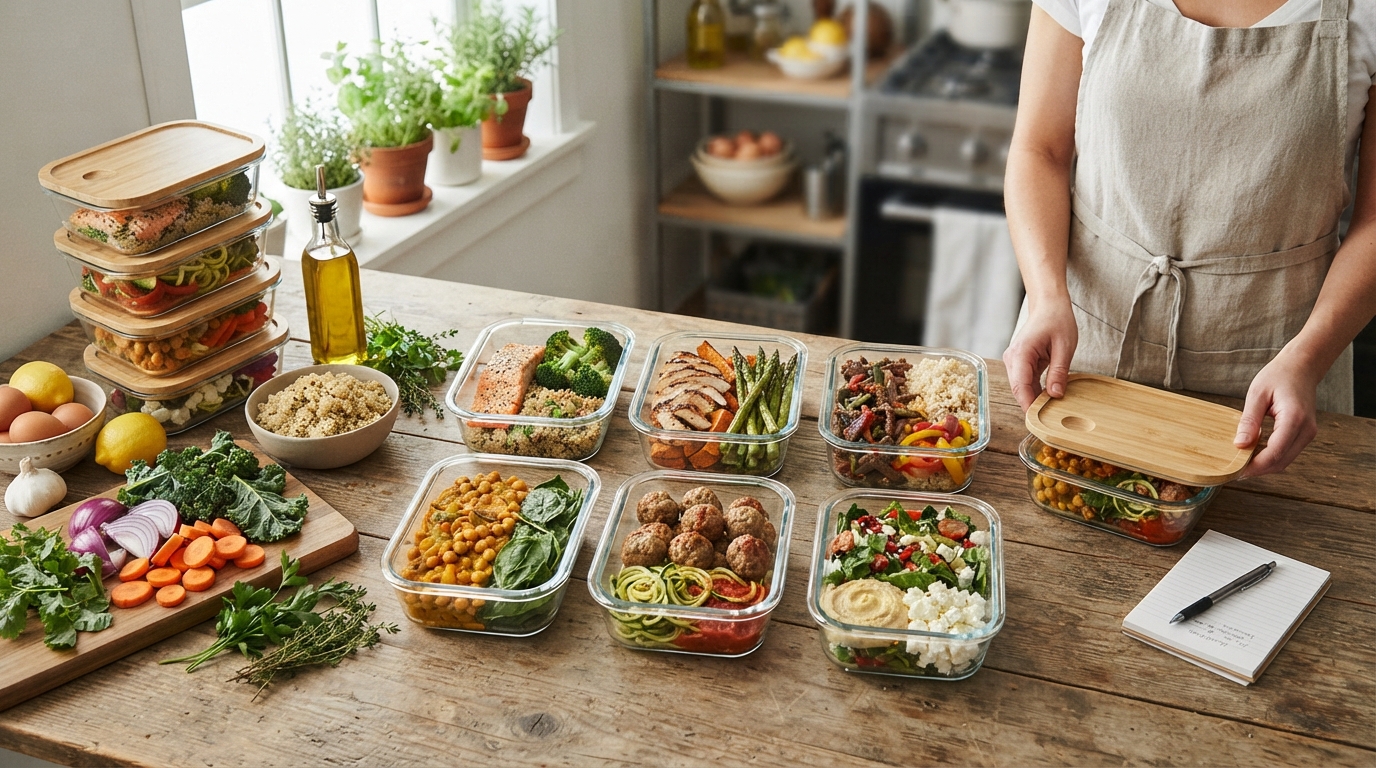
Think about it: one Sunday afternoon of cooking can yield lunch and dinner for the next five days. That is about 10 meals from one solid session. The key lies in choosing versatile base ingredients — proteins, grains, and vegetables — that can be transformed into different dishes throughout the week.
If you are just getting started, focus on recipes that scale easily and reheat well. Curious where to begin? Check out our collection of quick and easy recipes that are perfect for batch cooking.
Essential Tools You Need for Batch Cooking
You do not need a professional kitchen, but a few key tools will make your weekly cooking session much smoother. Here is what I recommend every home cook have on hand:
- A large stockpot or Dutch oven — perfect for soups, stews, and cooking grains in bulk.
- High-quality sheet pans — ideal for roasting multiple trays of vegetables or chicken thighs at once.
- Glass meal prep containers — these stack well, are microwave-safe, and keep food fresher than plastic.
- A sharp chef’s knife — prepping onions, peppers, and herbs goes twice as fast with a good blade.
- A slow cooker or Instant Pot — set it and forget it while you prep other ingredients.
Investing in the right containers is especially important. Airtight glass containers prevent odors from mixing and help your prepped meals last up to five days in the fridge. If you are looking for a reliable set, confira esta opção — it is a top-rated choice among meal preppers who also enjoy baking healthy alternatives like keto breads and desserts.
How to Plan Your Weekly Menu Like a Pro
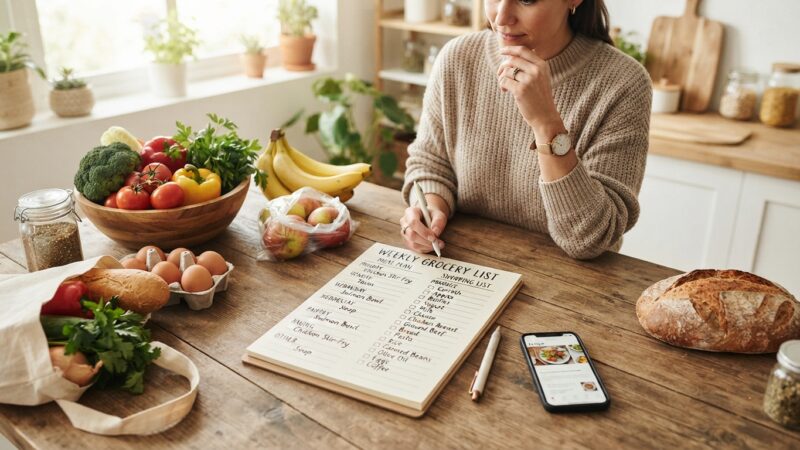
Before you touch a single pot, sit down with a notepad (or a notes app) for 15 minutes. Good weekly meal planning is the backbone of cooking once and eating all week. Start by looking at your schedule: which nights are busiest? Those are the nights you need a reheat-and-eat meal.
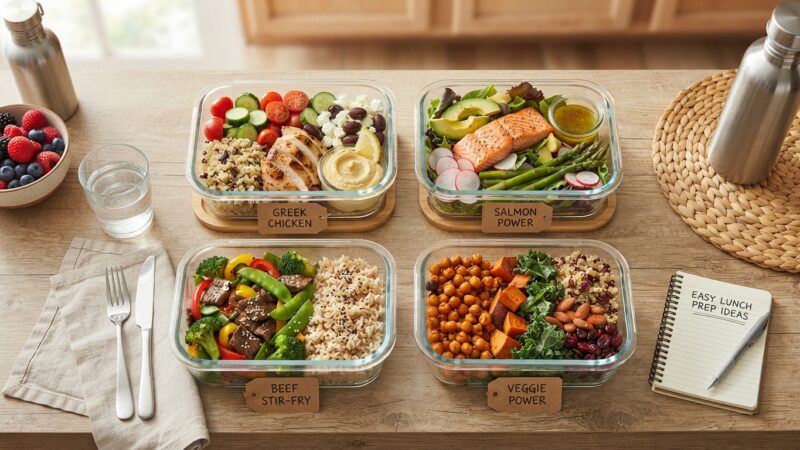
Choose three to four base recipes that share overlapping ingredients. For example, cook a big batch of roasted chicken, a pot of quinoa, and sautéed spinach. On Monday, eat the chicken with quinoa and a salad. On Tuesday, shred the leftover chicken into tacos. On Wednesday, stir the chicken and quinoa into a soup with broth and veggies.
One of the best time-saving kitchen hacks is to pick a protein theme for the week — chicken, ground beef, beans, or tofu — and build different cuisines around it. For inspiration on global flavors, browse our international cuisine recipes to keep your meals exciting.
Step-by-Step: Your 2-Hour Cooking Session
Once your menu is planned, dedicate two hours on a Sunday or your day off. Put on a podcast or playlist, and work through these steps in order:
| Step | Task | Time Estimate |
|---|---|---|
| 1 | Preheat oven and bring a pot of salted water to boil | 5 minutes |
| 2 | Wash and chop all vegetables (onions, peppers, carrots, etc.) | 25 minutes |
| 3 | Season and roast proteins (chicken breasts, fish, or tofu) on sheet pans | 30 minutes |
| 4 | Cook grains (rice, quinoa, farro) and legumes if using | 20 minutes |
| 5 | Assemble sauces and dressings in jars | 10 minutes |
| 6 | Portion everything into containers and refrigerate | 15 minutes |
Total active time is about 1 hour and 45 minutes. The oven and stovetop do most of the heavy lifting while you prep. By the end, you will have the building blocks for multiple meals. For even more structure, our kitchen tips and meal prep guides offer seasonally inspired plans to keep things fresh.
Repurposing Ingredients to Avoid Monotony
The biggest fear people have about batch cooking is boredom. Nobody wants to eat the same plate of chicken and rice for three days straight. The solution is to treat your cooked ingredients like a pantry — combine them differently each day.
Here are three easy transformations using the same base ingredients:
- Roasted vegetables + cooked grains + canned beans + vinaigrette = a hearty grain bowl for lunch.
- Shredded protein + corn tortillas + salsa + avocado = fast tacos for a busy Tuesday.
- Cooked grains + broth + leftover veggies + protein = a warming soup in under 15 minutes.
By changing textures and flavors with different sauces, spices, or wraps, you trick your brain into feeling like you are eating something new. This technique is especially useful for those following a healthy meal prep routine who want to avoid the temptation of takeout.
Safe Storage: Making Your Food Last All Week
Cooking once and eating all week only works if your food stays fresh and safe to eat. Follow the USDA guidelines: cooked leftovers should be refrigerated within two hours and consumed within three to four days. Freeze portions you will not eat by day four.
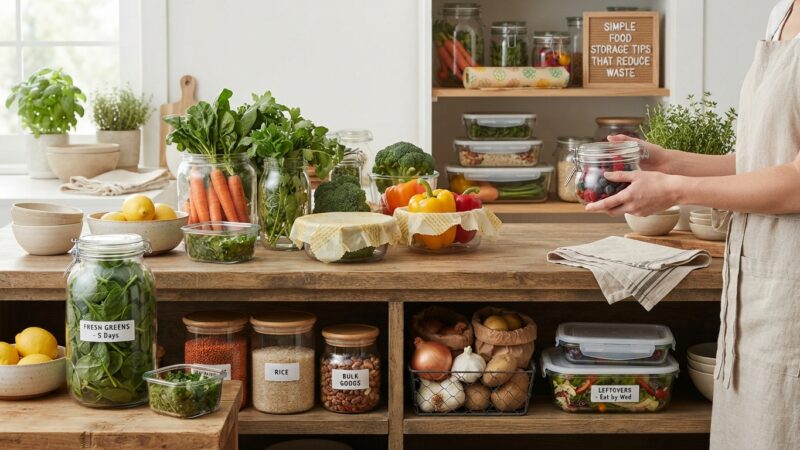
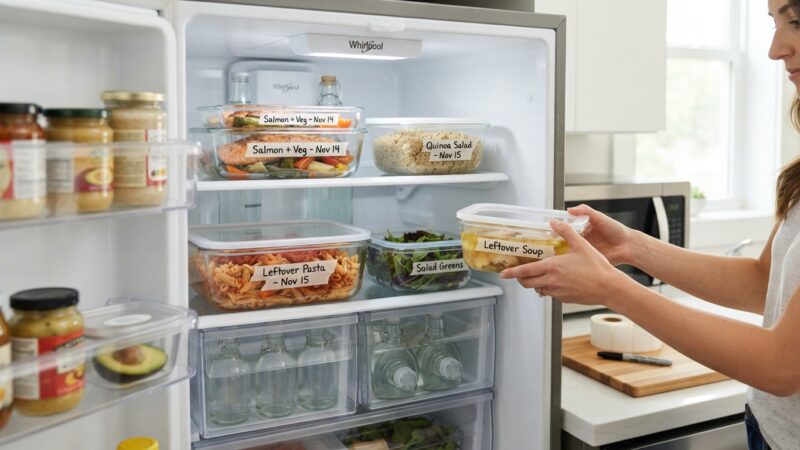
Use the “first in, first out” rule in your fridge. Put the meals meant for Monday and Tuesday in front, and meals for Thursday and Friday toward the back. Label containers with the date and contents so you never play the guessing game.
For best results, store wet components (sauces, dressings, juicy vegetables) separately from dry components (grains, proteins, leafy greens). Combine them only right before eating. This keeps everything crisp and flavorful. Serious Eats has a fantastic deep dive on food storage best practices if you want to geek out on the science.
Frequently Asked Questions
How long can I store cooked food in the fridge?
Cooked meals stay fresh for 3 to 4 days in the refrigerator. After that, freeze any leftovers to prevent spoilage.
What recipes are best for cooking once and eating all week?
Look for recipes that reheat well: soups, stews, casseroles, roasted proteins, grain salads, and pasta bakes. Avoid dishes with delicate greens or crispy coatings that get soggy.
Do I have to eat the same thing every day?
Not at all! The key is to cook base ingredients and combine them differently. Use different sauces, breads, or wraps to create variety from the same batch.
Can I meal prep if I have dietary restrictions?
Absolutely. The method works for any diet — keto, vegan, gluten-free, or dairy-free. Simply choose ingredients that fit your needs. For specialized recipes, explore our healthy and special diet recipes.
Is it safe to reheat food multiple times?
No. Only reheat the portion you plan to eat. Repeatedly cooling and reheating the same large batch increases the risk of bacterial growth. Portion before storing.
What if I don’t have a lot of fridge space?
Freeze flat in labeled freezer bags to save room. You can also prioritize making meals that last 3 days and supplement with fresh ingredients midweek.
How do I keep vegetables from getting mushy?
Store crunchy veggies (carrots, bell peppers, cucumbers) raw and unwashed. Only wash and chop them the day you plan to eat them. Cooked vegetables should be slightly undercooked so they finish when reheated.
Can I use a slow cooker for meal prep?
Yes! A slow cooker is perfect for cooking large batches of shredded meat, chili, or beans while you prep other ingredients. It frees up stovetop space and requires minimal attention.
Conclusion
Mastering the ability to cook once and eat all week is one of the most practical skills you can develop in the kitchen. It saves time, money, and mental energy while helping you eat consistently wholesome meals at home. The learning curve is small — just one or two trial weeks — but the payoff lasts a lifetime.
Start small: pick one protein, one grain, and one vegetable for your first session. Use the table above as your roadmap. In less than two hours, you will have a fridge full of possibilities, not a headache full of decisions. Your future self will thank you every single evening when dinner is ready in five minutes flat.
Have you tried batch cooking before? Share your favorite tip in the comments below — and do not forget to bookmark this page for your next Sunday prep session.