Homemade Bread Recipes Every Beginner Should Try
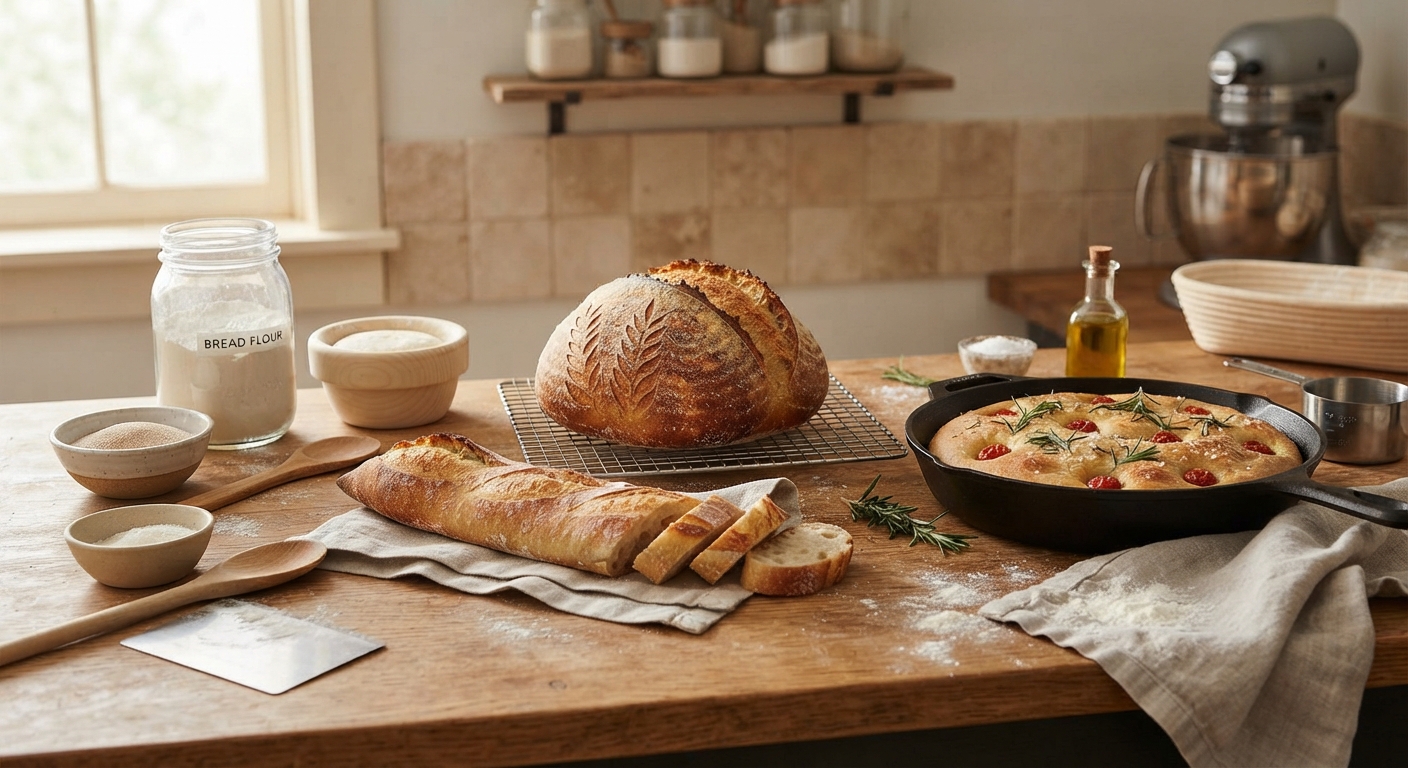
There’s something magical about pulling a golden, steaming loaf of homemade bread out of your own oven. The aroma alone can make any kitchen feel like a cozy bakery. If you’ve never baked bread before, don’t worry — you’re in the right place.
These homemade bread recipes for beginners are designed to build your confidence. You don’t need a stand mixer, a bread stone, or years of experience. All you need is a little patience, some simple ingredients, and the willingness to get your hands a bit floury.
In this guide, I’ll walk you through six foolproof recipes, share my best beginner baking tips, and answer the most common questions new bakers ask. Let’s get that first loaf in the oven.
Why Start with Homemade Bread?
Baking your own bread is not only satisfying — it’s also healthier and more affordable than store-bought options. You control exactly what goes into your loaf: no preservatives, no mysterious additives, just flour, water, salt, and yeast.
Plus, the learning curve is much gentler than most people think. Once you master a basic white loaf, you can easily experiment with whole wheat, herbs, or even sweet variations. If you’re looking for more quick and easy recipes to complement your bread, we have you covered.
Essential Tools and Ingredients for Beginner Bakers
Before we dive into the recipes, let’s make sure you have the basics. You don’t need fancy equipment. Here’s your starter kit:
- Flour: All-purpose flour works great for most beginner loaf recipes. Bread flour gives a chewier texture.
- Yeast: Active dry yeast or instant yeast are both beginner-friendly. Instant yeast is faster and doesn’t need proofing.
- Salt: Fine sea salt or table salt — never skip it, as salt controls fermentation.
- Warm water: Around 105–110°F (40–43°C) helps activate the yeast without killing it.
- Mixing bowl: A large bowl gives you room to knead or fold.
- Loaf pan: A standard 9×5-inch pan is ideal for sandwich bread.
If you want to explore healthier alternatives later, check out our healthy and special diet recipes section for gluten-free and low-carb bread options.
The 6 Best Homemade Bread Recipes for Beginners
Each of these recipes has been tested by real beginner bakers. They prioritize simplicity and great results. Start with number one, then work your way down.
1. Classic No-Knead White Bread
No-knead bread is the perfect entry point. You mix the dough, let time do the work, and bake a crusty artisan loaf. Combine 3 cups all-purpose flour, 1½ teaspoons salt, ½ teaspoon instant yeast, and 1½ cups warm water. Stir until shaggy, cover, and let rest for 12–18 hours. Bake in a preheated Dutch oven at 450°F for 30 minutes with the lid on, then 15 minutes without.
2. Simple Soft White Sandwich Bread
If you want bread for toast and PB&J, this is it. Mix 1 cup warm milk, 2 tablespoons sugar, 1 packet active dry yeast, and let it foam. Add 3 cups flour, 1 teaspoon salt, 2 tablespoons butter. Knead 8 minutes, let rise 1 hour, shape into a loaf, and bake at 350°F for 35 minutes. This is one of those desserts & baking staples you’ll return to again and again.
3. Buttery Dinner Rolls
These soft, pull-apart rolls are a crowd-pleaser. Use the same simple yeast bread dough as the sandwich bread, but after the first rise, divide into 12 equal balls. Place them in a greased 9×13 pan, let rise again, brush with melted butter, and bake at 375°F for 18–20 minutes. Perfect alongside soups or stews.
4. Whole Wheat Honey Bread
This recipe swaps half the white flour for whole wheat flour, adding honey for sweetness and moisture. The dough is slightly stickier, so resist adding too much flour. The result is a hearty, slightly sweet loaf that’s fantastic for toast. Follow the same method as the white sandwich bread, but use 1½ cups whole wheat and 1½ cups all-purpose flour.
5. Herbed Focaccia
Focaccia is the most forgiving bread you’ll ever make. Mix 4 cups flour, 2 teaspoons instant yeast, 2 teaspoons salt, and 2 cups warm water. Let rise 2 hours. Pour into an oiled baking sheet, press dimples into the dough, drizzle olive oil, sprinkle rosemary and flaky salt. Bake at 425°F for 25 minutes. It’s crispy outside, fluffy inside.
6. Skillet Cornbread (Bonus)
While not yeast bread, cornbread is a fantastic gateway to baking with minimal effort. It’s naturally gluten-free if you use certified cornmeal. Bake it in a hot cast-iron skillet for a crispy bottom and tender crumb. Pair it with chili or enjoy it with honey butter.
Quick Comparison of Beginner Bread Recipes
Use this table to choose the right recipe based on your time and skill level.
| Recipe | Prep Time | Rise Time | Difficulty | Best For |
|---|---|---|---|---|
| No-Knead White Bread | 10 minutes | 12–18 hours | ★☆☆☆☆ | Crusty artisan loaves |
| Soft Sandwich Bread | 20 minutes | 2 hours | ★★☆☆☆ | Sandwiches & toast |
| Buttery Dinner Rolls | 25 minutes | 2 hours | ★★☆☆☆ | Dinner side dish |
| Whole Wheat Honey Bread | 20 minutes | 2.5 hours | ★★☆☆☆ | Healthier everyday bread |
| Herbed Focaccia | 15 minutes | 2 hours | ★☆☆☆☆ | Appetizers & dipping |
| Skillet Cornbread | 10 minutes | None | ★☆☆☆☆ | Quick bread side |
Common Beginner Mistakes (And How to Avoid Them)
Every new baker makes a few mistakes. That’s totally normal. Here are the most common ones I’ve seen in 15 years of teaching beginners:
- Killing the yeast: If your water is too hot (above 130°F), you’ll kill the yeast. Always check with a thermometer or use comfortable bathwater temperature.
- Adding too much flour: Sticky dough is okay. Add flour only until the dough comes together, not until it feels dry.
- Skipping the salt: Salt isn’t just for flavor — it controls yeast activity and strengthens gluten. Don’t omit it.
- Rushing the rise: A slow rise develops better flavor. If your kitchen is cold, let the dough rise in the oven with the light on.
For more everyday kitchen wisdom, browse our kitchen tips and meal prep category — it’s packed with helpful advice.
Tips for Getting the Perfect Crust and Crumb
The crust and crumb (the inside texture) are what separate good bread from great bread. Here’s how to nail both as a beginner:
- Steam is your friend: For a crispier crust, place a pan of hot water on the oven’s bottom rack while baking. The steam keeps the surface elastic, allowing the bread to expand fully.
- Cool completely before slicing: Cutting into hot bread crushes the airy crumb. Wait at least 30–60 minutes. I know it’s hard, but trust me.
- Use a kitchen scale: Measuring flour by weight (1 cup all-purpose = 120g) is far more accurate than scooping. It prevents dense or dry loaves.
For a deeper dive into science-backed baking methods, Serious Eats has an excellent article on bread science that explains how gluten development works.
Frequently Asked Questions About Homemade Bread for Beginners
1. Can I use all-purpose flour instead of bread flour?
Absolutely. All-purpose flour contains less protein than bread flour, so your loaf will be slightly softer and less chewy. For your first few loaves, all-purpose is perfectly fine.
2. My bread didn’t rise. What went wrong?
The most common reason is old or dead yeast. Check the expiration date on your yeast packet. Also, make sure your liquid wasn’t too hot (above 130°F) or too cold (below 105°F).
3. How do I store homemade bread?
Store it in a paper bag or bread box at room temperature for up to 3 days. Avoid plastic bags — they trap moisture and make the crust soggy. For longer storage, slice and freeze in a zip-top bag.
4. Can I make these recipes without a stand mixer?
Yes! All of these recipes can be made by hand. Kneading by hand takes about 8–10 minutes. It’s actually a great way to feel the dough and learn when it’s ready.
5. Why is my bread dense and heavy?
Dense bread usually means not enough kneading, not enough rising time, or too much flour added during mixing. Next time, knead a little longer and use a light hand when flouring your surface.
6. Do I need a Dutch oven for no-knead bread?
A Dutch oven works best because it traps steam, but you can also bake no-knead bread on a regular baking sheet. Place a pan of water on the lower rack to create steam. The crust won’t be as thick, but it will still be delicious.
7. Can I double these recipes?
Yes, you can double most recipes. Just make sure your bowl is large enough for the dough to double in size. Baking time may increase slightly, so check for doneness with a thermometer (190–200°F internal).
8. What’s the easiest bread for absolute beginners?
Start with the no-knead white bread or the herbed focaccia. Both require almost no hands-on time and have very high success rates. Once you’ve made one of those, you’ll feel ready for the sandwich bread.
Conclusion
Baking homemade bread as a beginner is one of the most rewarding kitchen skills you can learn. Start with a simple recipe like no-knead white bread or herbed focaccia, and don’t stress over perfection. Every batch teaches you something new.
The six recipes shared here are your launchpad. Once you feel comfortable, try mixing flours, adding seeds, or even shaping rolls. And if you’re looking to expand your baking repertoire even further, why not explore some international cuisine breads like naan or pita? The possibilities are endless.
If you ever feel tempted to shortcut with a specialty mix, confira esta opção for keto-friendly bread recipes that are just as satisfying. But honestly, your first loaf from scratch will be the one you remember most. So preheat that oven, dust off your counter, and bake something wonderful.