Best Knife Skills Every Beginner Should Learn
Walking into a kitchen without knowing how to handle a knife is like driving a car without learning the pedals. You can eventually get somewhere, but it won’t be pretty. Learning the best knife skills every beginner should learn changes everything. It speeds up your prep, makes your food cook evenly, and keeps your fingers intact.
I have spent over a decade writing about cooking, and I still remember the day I finally learned to hold a chef’s knife properly. My prep time for a stir-fry dropped from twenty minutes to six. That is the kind of transformation these skills bring. Let’s break them down step by step.
Why Knife Skills Matter More Than You Think
Good knife skills are not about showing off fancy cuts on social media. They are about consistency. When you cut vegetables into uniform pieces, they cook at the same rate. No more burnt onion edges next to raw centers. This is one of the most important basic cutting techniques to master early on.
Plus, proper technique reduces fatigue. If your hand cramps after chopping one carrot, your grip is wrong. Learning the correct chef knife grip will let you prep a whole bag of onions without pain. And let’s be honest—faster prep means you are more likely to cook at home instead of ordering takeout.
For more help with getting dinner on the table quickly, check out our collection of quick & easy recipes that pair perfectly with your new chopping speed.
The Only Grip You Need to Master
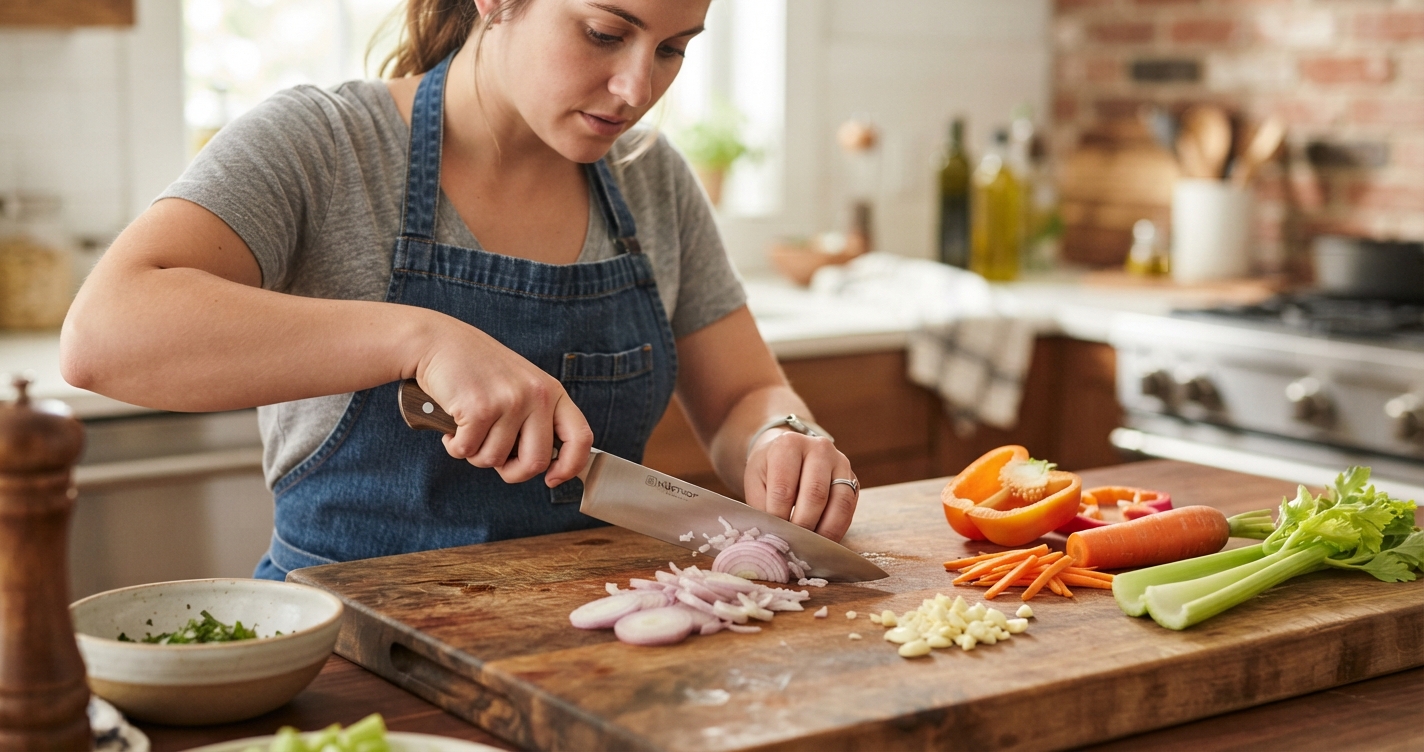
Most beginners hold a knife like a sword, with all five fingers wrapped around the handle. Stop doing that. The correct grip is the “pinch grip.” Pinch the blade right above the handle between your thumb and index finger. Wrap your other three fingers loosely around the handle.
This gives you total control over the blade. You will feel the weight of the knife balanced in your hand, and your cuts will become instantly more accurate. It feels weird for the first ten minutes. Push through it. After one full meal prep, it will feel natural.
Your Guide Hand Matters Just as Much
The hand holding the food is called the guide hand, and it is the one most likely to get cut. The trick is to form a “claw” with your fingers. Curl your fingertips inward so your knuckles point toward the blade. Rest the flat side of the knife against your knuckles as you cut.
This creates a physical barrier. Your knuckles act like a rail, guiding the blade safely past your fingertips. Keep your thumb tucked behind your curled fingers. With practice, you will move much faster because you know your fingers are safe.
The Four Fundamental Cuts You Need to Know
You do not need a dozen fancy knife cuts to cook well. Focus on these four basic cutting techniques, and you can handle almost any recipe:
- The dice: Cut into planks, then sticks, then cubes. Aim for ½-inch pieces for soups and stews.
- The julienne: Thin matchstick strips, perfect for stir-fries and salads.
- The chiffonade: A ribbon cut for leafy herbs like basil or mint. Stack leaves, roll tightly, and slice thinly.
- The bias cut: A diagonal slice that exposes more surface area for caramelization—great for carrots and zucchini.
How to Sharpen and Care for Your Knife
A dull knife is dangerous. It slips off the food and heads straight for your finger. A sharp blade bites into the surface cleanly. You should hone your knife with a steel rod every few uses to realign the edge. Sharpen it on a whetstone every few months.
This directly improves your meal prep efficiency. A sharp knife cuts through a tomato skin without squashing it. It slices through an onion without making you cry as much (less cell damage means fewer tear gas compounds released). Treat your knife like a tool worth respecting.
If you are cooking for specific health goals, pairing good knife skills with clean ingredients makes a huge difference. Browse our healthy & special diet recipes to put your new skills to good use.
Common Mistakes and How to Fix Them
Even experienced cooks slip into bad habits. Here are the most common beginner mistakes and how to fix them:
Lifting the knife too high. Keep the tip of the knife on the cutting board and rock the blade up and down. This is called the “rock chop.” It keeps your motion controlled and fast.
Using the wrong board. Glass or stone boards destroy your knife edge. Always use wood or soft plastic. A bamboo board is a solid affordable option.
Pressing too hard. Let the sharp blade do the work. If you are forcing the knife through a pepper, it is either dull or you are using too much muscle.
Knife Safety Rules You Never Skip
Kitchen safety starts with respect for the blade. Follow these rules every single time:
| Rule | Why It Matters |
|---|---|
| Never grab a falling knife | Let it fall; your reflexes are slower than gravity |
| Always cut away from your body | Prevents accidental stabs to your torso or hand |
| Keep your blade dry | A wet handle is a slippery handle |
| Store knives in a block or on a magnetic strip | Loose drawers dull edges and cause cuts |
These habits are part of the broader kitchen safety tips that every home cook should internalize. Once they are automatic, you can focus entirely on the joy of cooking.
Building Speed Through Repetition
Speed comes naturally after accuracy. Do not rush to chop an onion in ten seconds on day one. Instead, practice the same cut on a potato every day for a week. Within a month, your muscle memory will take over.
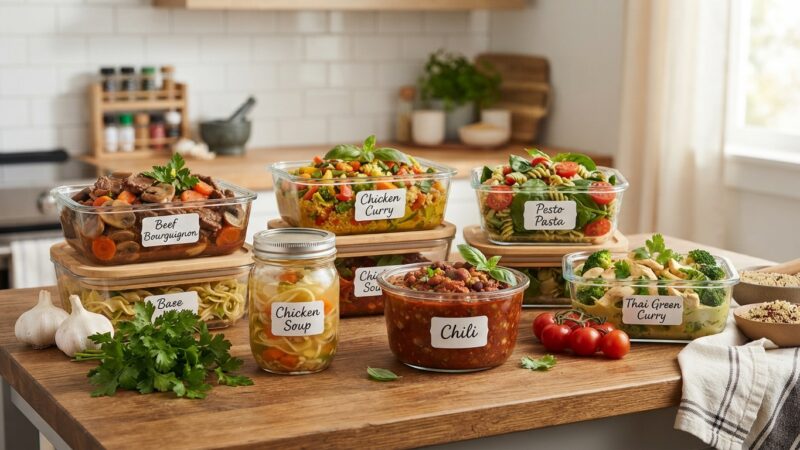
Try prepping a big batch of vegetables for the week. Slice bell peppers, dice onions, and julienne carrots all at once. Store them in containers. When you are ready to cook, everything is ready to go. This is meal prep efficiency at its finest.
If you want to explore global flavors with your prepped veggies, check out our international cuisine recipes for inspiration.
Choosing the Right Knife for a Beginner
You do not need a full block of knives. Start with one good 8-inch chef’s knife. It handles 90% of kitchen tasks. Add a small paring knife for detailed work like peeling fruit or deveining shrimp later.
A comfortable handle is more important than a famous brand. Visit a store and hold a few knives in your hand. The right one should feel like an extension of your arm. If you are looking for a great starter option, confira esta opção for a well-balanced chef knife that won’t break the bank.
Frequently Asked Questions
What is the most important knife skill for a beginner?
Learning the pinch grip. Everything else follows from having proper control over the blade. Once you master that, your cuts will improve naturally.
How often should I sharpen my kitchen knife?
Hone with a steel rod every 2–3 uses. Sharpen on a whetstone every 2–3 months, or when the knife struggles to cut through a ripe tomato.
Can I learn knife skills without taking a class?
Absolutely. Watch videos from trusted sources like New York Times Cooking or Serious Eats. Practice one cut per week and you will improve quickly.
What type of cutting board is best for knives?
Wood or bamboo boards are gentle on the edge. Avoid glass, marble, or stone boards—they will dull your knife fast.
Why do my onion pieces stick to the knife?
A sharp blade reduces sticking, but a little moisture on the blade helps too. Wipe the blade with a damp cloth between cuts.
Is it worth buying an expensive knife as a beginner?
Not necessary. A solid mid-range $40–$60 chef knife is perfect to start. Save the splurge for when you know exactly what you want.
How do I clean and store my knife safely?
Hand wash with soap and warm water immediately after use. Dry it fully and store it in a knife block or magnetic strip—never loose in a drawer.
Conclusion
Mastering the best knife skills every beginner should learn takes practice, but the payoff is massive. You will cook faster, safer, and with better results. Start with your grip, then practice the four fundamental cuts. Sharpen your blade regularly and respect the safety rules.
Within a few weeks, your prep time will shrink, your confidence will grow, and you might even start looking forward to chopping vegetables. That is the moment you know you have leveled up in the kitchen. For more foundational tips, visit our kitchen tips & meal prep section and keep building your skills.