Easy Family Meal Planning for Stress-Free Weeks

We’ve all been there: it’s 5:30 PM, the kids are hungry, and you have no idea what to cook. That frantic scramble is the number one cause of takeout burnout and kitchen stress.
But it doesn’t have to be that way. With a little bit of easy family meal planning, you can transform your weeknights from chaotic to calm. This isn’t about rigid schedules or gourmet cooking. It’s about building a simple system that works for your real life.
Think of it as a roadmap for your kitchen. You’ll save money, waste less food, and actually enjoy your time around the table. Let’s walk through the exact steps to make stress-free weeknight dinners your new normal.
1. The Core Principle: Plan Your Week, Not Your Life
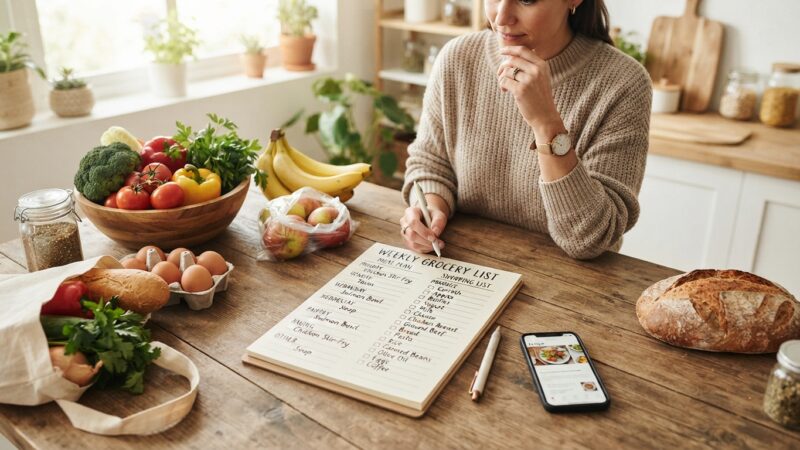
The biggest mistake people make is trying to plan every single meal for the next 30 days. Don’t do that. Instead, focus on one week at a time. Pick a consistent day—Sunday works great for most—to do your planning.
Sit down with a coffee and a simple notepad (or a notes app). Look at your family’s upcoming schedule. Do you have soccer practice on Tuesday? A late meeting on Thursday? That will tell you exactly which nights need to be fast, and which nights you can afford to spend 40 minutes cooking.
By matching meals to your schedule, you set yourself up for success. For ultra-busy nights, lean on our quick and easy recipes collection for 15-minute solutions.
2. Build a Core Repertoire of “Go-To” Meals
You don’t need a thousand recipes. You need about 10 to 15 solid ones that your family loves. These are your heavy hitters. Think of them as the foundation of your weekly meal schedule.
Start by listing 8 to 10 dinners you can cook without even looking at a recipe. They might include:
- Sheet pan chicken with roasted vegetables
- One-pot pasta with marinara and Italian sausage
- Taco Tuesday (ground beef, beans, and all the fixings)
- Stir-fry with whatever veggies you have in the fridge
- Breakfast for dinner (scrambled eggs, pancakes, fruit)
Once you have that list, rotating through it becomes second nature. You’ll spend less time searching for inspiration and more time actually cooking.
3. The “Crossover Ingredient” Strategy
This is a game changer for healthy family meals. When you plan your menu, look for ingredients that work across multiple recipes. This reduces waste and saves you from buying a full bag of something you’ll only use once.
For example, if you buy a whole head of cauliflower, you can use half in a creamy cauliflower soup on Monday and roast the other half with garlic and parmesan on Wednesday. The same goes for ground beef: use some for tacos on Tuesday and the rest for a quick chili later in the week.
| Ingredient | Monday Meal | Wednesday Meal |
|---|---|---|
| Ground Turkey | Turkey Burgers | Turkey & Black Bean Skillet |
| Fresh Spinach | Omelets | Wilted into Pasta Sauce |
| Bell Peppers | Fajitas | Stuffed Peppers |
This approach makes meal prep tips practical, not theoretical. You shop once, cook a few times, and stretch your ingredients across the entire week.
4. Set Up Your Sunday “Power Hour”
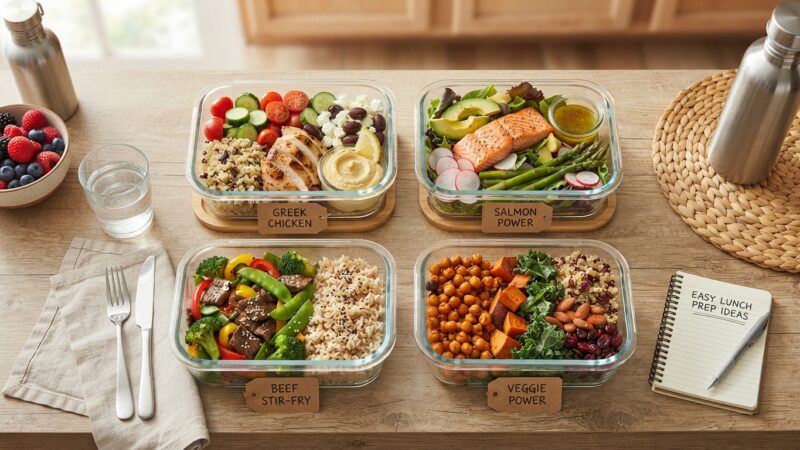
You don’t have to cook all week long. Dedicate one hour on Sunday to do the heavy lifting. This is where you wash, chop, and pre-portion. Here’s a simple checklist for your power hour:
- Wash and chop sturdy vegetables (onions, bell peppers, carrots)
- Cook a big batch of rice or quinoa
- Grill or bake several chicken breasts to shred later
- Hard-boil a half dozen eggs for quick snacks or salads
- Mix up a simple salad dressing or marinade
With these building blocks ready, whipping up a dinner on a Tuesday night takes half the time. You’re just assembling, not starting from scratch. For more ideas on staying organized, check out our full kitchen tips and meal prep section.
5. Keep a “Meal Bank” for Flexibility
Life happens. You get home late, someone gets sick, or you simply don’t feel like eating what you planned. That’s okay. The solution is to keep a “meal bank” in your freezer.
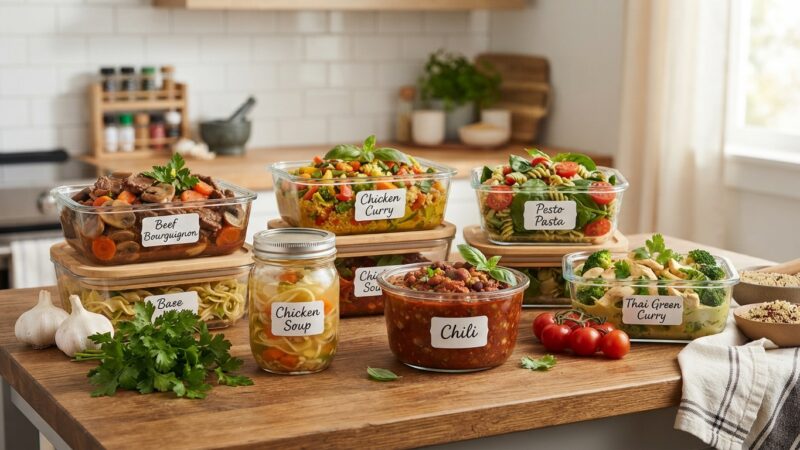
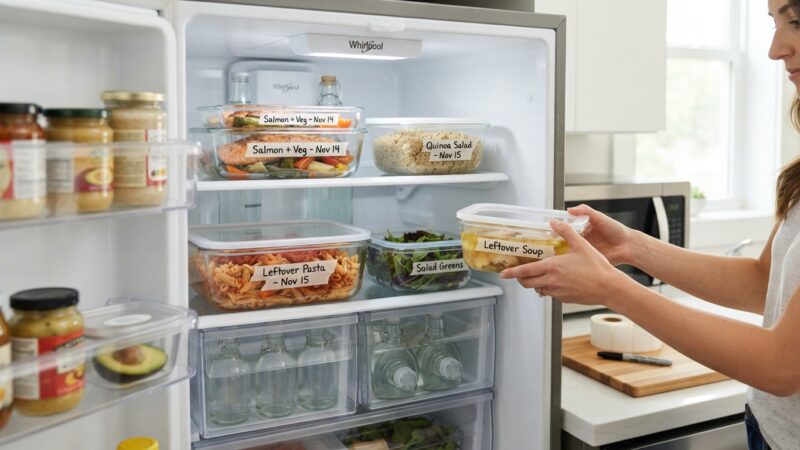
Every time you cook a double batch of something (like chili, Bolognese, or soup), freeze the extra portion in a labeled container. Over a few weeks, you’ll build a reserve of 4 to 6 emergency dinners.
When your weekly plan goes out the window, you just pull a meal from the bank. It’s the ultimate safety net for stress-free weeknight dinners. No panic, no takeout, just a warm, homemade meal in minutes.
If you love experimenting with flavors, you can also freeze parts of international cuisine meals like curry sauces or dumpling fillings for quick future dinners.
6. Get the Family Involved (Yes, Even the Kids)
Meal planning shouldn’t be a solo chore. Involve your family in the process, and you’ll get way less pushback at the table. Give each person a night to choose the main dish. It makes them feel invested.
On Sundays, pull out a whiteboard or a piece of paper and let everyone write down one meal they’d like to see. You don’t have to say yes to pizza every night, but giving them a voice reduces the “I don’t want that” drama later.
Younger kids can help with simple tasks like tearing lettuce, setting the table, or stirring a sauce. It’s not just about getting dinner done. It’s about teaching life skills and creating family time.
Frequently Asked Questions
How do I start meal planning if I’ve never done it before?
Start small. Plan just three dinners for the first week. Cook one of those meals on a weekend and freeze the leftovers. That gives you a buffer. As you get comfortable, add more days to your plan.
What if my family hates leftovers?
Reframe leftovers as “planned-overs.” If you roast a chicken on Monday, shred the remaining meat and use it for tacos on Tuesday. It’s not the same meal twice; it’s using ingredients smarter.
How much time should I spend on planning each week?
Most people find that 20 to 30 minutes is plenty. That includes looking at your schedule, picking meals, and writing a grocery list. The power hour on Sunday is separate and optional, but highly recommended.
What tools do I need for meal planning?
You really just need a pen and paper, or a simple notes app on your phone. Some people love using a magnetic weekly menu pad on the fridge. For those who want to explore new recipes without the stress, NYT Cooking offers a great library of family-friendly ideas.
How do I avoid getting bored with the same meals?
Keep a “rotation bucket” of 15 to 20 meals you enjoy. Every month, swap in one or two new recipes from a trusted source. You can also theme your nights, like “Pasta Wednesday” or “Fish Friday,” to create variety within structure.
Is it cheaper to meal plan or just buy as I go?
Meal planning is almost always cheaper. You buy exactly what you need, which cuts down on impulse purchases and waste. A University of Arizona study found that households that plan their meals can reduce food waste by up to 30%.
Can I meal plan if I’m on a special diet (like keto or gluten-free)?
Absolutely. The same principles apply. Focus on whole foods that fit your dietary needs and batch-prep them. If you’re looking for dessert alternatives that fit a keto lifestyle, check out this resource for delicious keto-friendly breads and sweets.
What do I do with leftover ingredients after the week is over?
Plan a “clean-out-the-fridge” night on your last planned dinner day. Throw leftover veggies, proteins, and grains into a stir-fry, a frittata, or a grain bowl. It’s creative, prevents waste, and often ends up being the most delicious meal of the week.
Conclusion
Easy family meal planning isn’t about perfection. It’s about being prepared. One small change—like spending 30 minutes on a Sunday—can save you hours of stress during the week.
Start with your core list of go-to meals. Use the crossover ingredient strategy. Build that freezer meal bank. And most importantly, give yourself grace. Some weeks will go perfectly. Other weeks, you’ll order pizza. Both are okay.
The goal is progress, not perfection. Take one tip from this article and try it this week. Your future self (and your hungry family) will thank you.
For more inspiration on keeping dinners fresh and exciting, don’t miss our healthy and special diet recipes that work for almost any table.