Simple Tips to Make Cooking Faster and Easier
Have you ever stared at a recipe that promises a quick dinner, only to spend 45 minutes chopping onions and digging for measuring cups? You are not alone. The good news is that you don’t need to become a gourmet chef to save time in the kitchen. With a few strategic adjustments, you can cut your active cooking time in half—and still end up with delicious meals.
In this guide, we’ll walk through practical, no-nonsense simple tips to make cooking faster and easier. Whether you are a busy parent, a student, or just someone who wants to enjoy home-cooked food without the hassle, these strategies will transform your weekly routine. For more hands-on ideas, check out our collection of kitchen tips and meal prep strategies.
1. Master the Art of Mise en Place (Prep Before You Cook)
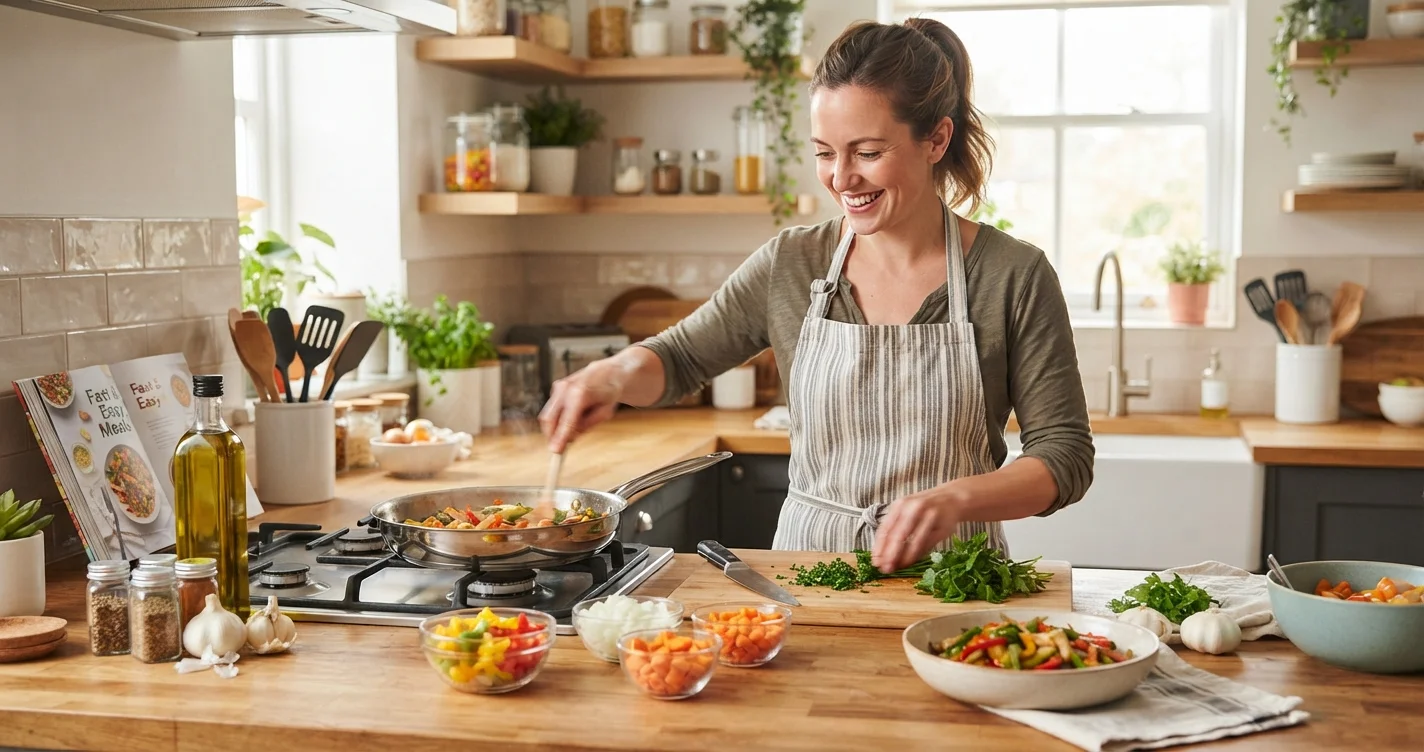
Professional chefs swear by mise en place, which means “everything in its place.” Before you turn on the stove, chop all your vegetables, measure your spices, and set out your protein. This simple habit prevents frantic searching mid-recipe and reduces the risk of burning your garlic while you hunt for the soy sauce.
Start small: read the recipe once, then gather and prep every ingredient. As you practice, you will naturally become faster. For example, wash and chop bell peppers, onions, and carrots in bulk on Sunday, then store them in airtight containers for the week. This single step can save you 15 minutes per meal.
2. Invest in a Sharp Chef’s Knife and a Good Cutting Board
A dull knife is not just frustrating—it is dangerous. You have to push harder, which increases the chance of slipping. A sharp chef’s knife glides through tomatoes, herbs, and meat with minimal effort. Pair it with a large, stable cutting board (wood or plastic, depending on your preference), and you will notice an immediate improvement in speed and safety.
If budget allows, buy a honing steel and use it every few uses to keep the edge aligned. A simple sharpening session once a month will keep your blade in prime condition. When your knife works for you, cooking stops feeling like a chore.
3. Use One-Pot and Sheet Pan Meals Whenever Possible
Fewer dishes mean less cleanup, and less cleanup means faster overall time in the kitchen. One-pot pastas, stir-fries, and sheet pan dinners are perfect examples. For instance, toss chicken thighs, broccoli, and baby potatoes on a lined sheet pan, drizzle with olive oil and seasoning, and roast at 400°F for 25 minutes. Dinner is ready with only one pan to wash.
This approach aligns perfectly with quick and easy recipes that emphasize minimal equipment. You can even adapt international dishes—like a one-pan Mexican rice bowl or a sheet pan teriyaki salmon—to cut down on both cooking and cleaning time.
4. Embrace Batch Cooking and Freezer-Friendly Staples
Batch cooking is one of the most powerful meal prep strategies for busy weeks. Dedicate 90 minutes on a Sunday to cook a large batch of rice, quinoa, roasted vegetables, or grilled chicken breast. Portion them into single-serving containers and freeze or refrigerate. Then, on a hectic Tuesday, you can assemble a balanced bowl in under 10 minutes.
Here are a few freezer-friendly ideas to get you started:
- Cooked grains: freeze in flat bags for quick thawing.
- Homemade tomato sauce: freeze in silicone muffin trays.
- Marinated raw chicken: freeze directly in the marinade in a zip-top bag.
- Chopped herbs: combine with olive oil and freeze in ice cube trays.
When you invest in batch cooking, you invest in your future self’s peace of mind. It also pairs beautifully with healthy special diet recipes if you are managing dietary restrictions.
5. Organize Your Kitchen for Maximum Flow
Your kitchen layout directly affects how fast you can cook. Keep your most-used tools within arm’s reach: spatula, tongs, measuring spoons, and a microplane can hang on a magnetic strip or sit in a crock near the stove. Store your oils, salt, and pepper near the cooking area so you don’t have to cross the kitchen to season a dish.
Another trick is to group ingredients by usage. For example, keep all baking items (flour, sugar, baking soda) together in one cabinet, and all spices in a pull-out drawer or tiered rack. This reduces mental friction and physical steps.
For a quick visual reference, here is a simple comparison of two kitchen setups:
| Kitchen Feature | Disorganized Kitchen | Optimized Kitchen |
|---|---|---|
| Knife storage | Drawer with other utensils | Magnetic strip or knife block within arm’s reach |
| Spices | Random cabinet, alphabetized by memory | Tiered shelf or labeled jars in a pull-out drawer |
| Measuring cups | Buried in a drawer | Hanging on a hook or in a divided caddy |
| Oil and vinegar | Back of a high shelf | Countertop caddy near the stove |
6. Double Up on Certain Kitchen Tasks
Running a microwave and a stovetop simultaneously is obvious, but many home cooks forget to use time overlaps strategically. While your pasta boils (10 minutes), you can steam broccoli in the microwave (4 minutes) and quickly sauté garlic in a small pan. By the time the pasta is al dente, all components are ready to combine.
Another example: while your oven preheats, chop the vegetables for the dish. Or, while your pan warms up, pat your protein dry and season it. These micro-overlaps shave off minutes from each step, and those minutes add up to a faster overall cooking experience.
If you enjoy exploring flavors from around the world, applying these quick cooking hacks to international cuisine recipes can make exotic meals feel as fast as a basic stir-fry.
7. Use the Right Tools for the Job
A garlic press, a microplane for zesting, a kitchen shears for snipping herbs, and a food processor for chopping vegetables can drastically reduce prep time. For example, instead of mincing garlic by hand (30 seconds per clove), a garlic press does it instantly. Instead of dicing carrots by hand (2 minutes), a food processor can do it in 10 seconds.
One specific tool that many home cooks find transformative is a high-quality, non-stick sheet pan liner, which eliminates scrubbing. And if you are exploring low-carb or special diet options, you might also want to check out this collection of keto-friendly baking and dessert mixes that save mixing and measuring time while keeping your diet on track.
8. Always Read the Full Recipe Before You Start
This sounds trivial, but skipping this step is one of the biggest time-wasters. A recipe may call for “1 cup cooked quinoa, cooled,” which means you need to cook it an hour ahead. Or it might ask you to marinate the meat overnight. If you only discover this mid-cooking, your dinner timeline is ruined.
Reading the full recipe also reveals opportunities for shortcuts. If the recipe says “sauté onions for 5 minutes until translucent,” you can start boiling water for pasta at the same time. Being proactive rather than reactive is the essence of time-saving cooking tips.
Frequently Asked Questions (FAQ)
1. What is the single biggest time-saver in the kitchen?
Sharpening your knife and keeping it sharp is arguably the biggest time-saver. A sharp knife cuts faster and safer, reducing prep time by up to 40% compared to a dull blade.
2. How can I speed up meal prep on a busy weeknight?
Use frozen pre-chopped vegetables, cook grains in bulk over the weekend, and rely on one-pan recipes. Also, keep a few go-to spice blends (like Italian seasoning or taco seasoning) handy to avoid measuring individual spices.
3. Is batch cooking the same as meal prepping?
They overlap, but batch cooking usually means cooking large quantities of individual components (e.g., rice, chicken, roasted veggies), while meal prepping often involves assembling full meals. Both are effective meal prep strategies for saving time during the week.
4. Do I really need a food processor to cook faster?
You don’t need one, but it is a significant time-saver if you frequently chop vegetables, make pesto, or grind nuts. A mini food processor is affordable and takes up little cabinet space.
5. How can I avoid dirtying too many dishes?
Opt for one-pot meals, sheet pan dinners, or casseroles. If you must use multiple bowls, reuse one bowl for dry ingredients, then for wet ingredients, or simply prep ingredients in the order you need them.
6. What is the best way to organize spices for quick access?
Store them alphabetically in a pull-out drawer or tiered shelf so you can see all labels at a glance. Keep your most-used spices (salt, pepper, garlic powder, paprika) in a small magnetic caddy on the refrigerator door or near the stove.
7. Can these tips work for beginners who have little kitchen experience?
Absolutely. In fact, these simple tips to make cooking faster and easier are especially helpful for beginners because they reduce overwhelm. Start with just one or two tips (like reading the recipe first and sharpening your knife) and build from there.
8. Are there any specific tools you recommend for faster baking?
A digital kitchen scale, cookie scoop, and an oven thermometer are invaluable for baking speed and accuracy. A scale lets you measure flour and sugar by weight instead of relying on messy measuring cups, which is both faster and more precise.
Conclusion
Cooking faster and easier isn’t about magically finding extra hours. It is about working smarter: prepping ahead, using the right tools, organizing your space, and overlapping tasks. Start by implementing just two or three of these tips this week. You will notice an immediate difference in how relaxed and efficient your time in the kitchen feels.
If you enjoyed these ideas, explore more desserts and baking tips to apply the same efficiency to your sweet creations. And remember: every shortcut you take now builds a habit that lasts a lifetime. Happy cooking!


