Kitchen Essentials Every Home Cook Should Own
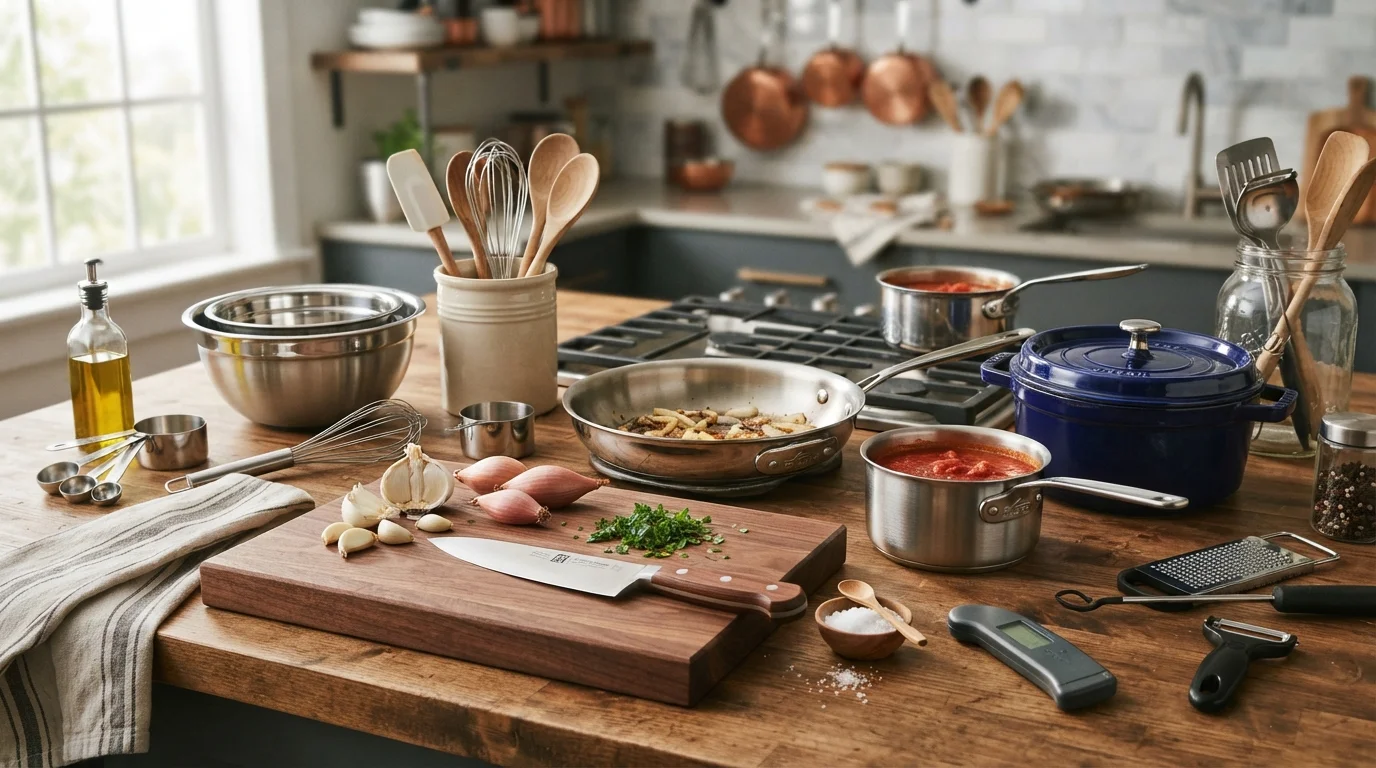
Walking into a kitchen that’s set up for success changes everything. You don’t need a dozen fancy gadgets or a drawer full of single-use tools. What you really need are a few high-quality kitchen essentials every home cook relies on day after day.
Whether you’re just starting out or you’ve been cooking for years, having the right equipment makes meals faster, safer, and more enjoyable. This guide covers the absolute must-haves—no fluff, no gimmicks. Just practical, proven tools that earn their spot in your kitchen.
1. The Chef’s Knife: Your Most Important Tool
A good chef’s knife is the heart of your kitchen. You’ll use it for chopping onions, slicing peppers, and trimming meat. It’s worth investing in a quality blade that feels balanced in your hand.
Look for an 8-inch chef’s knife made from high-carbon stainless steel. This size handles almost everything, from delicate herbs to butternut squash. Keep it sharp with a honing rod or a whetstone—a dull knife is actually more dangerous than a sharp one.
If you’re building your collection from scratch, start with this knife and a sturdy cutting board. You’ll be amazed at how much you can prep with just these two items. For more ideas on quick meals that make the most of your knife skills, check out our quick and easy recipes.
2. Cutting Boards That Last
You need at least two cutting boards: one for raw proteins and one for fruits and vegetables. This prevents cross-contamination and keeps your food safe.
Wooden boards are gentle on knife edges and look beautiful, but they require regular oiling. Plastic or bamboo boards are lighter and dishwasher-safe. Go for a large board—at least 16 by 12 inches—so you have room to work without food falling off the edge.
Pro tip: Place a damp paper towel or a silicone mat under your board to stop it from sliding. That small step makes chopping feel much more controlled and comfortable.
3. The Versatile Cast Iron Skillet
A cast iron skillet is one of the most durable kitchen essentials every home cook should own. It sears steaks perfectly, bakes cornbread, fries chicken, and even goes from stovetop to oven without a problem.
Cast iron retains heat exceptionally well, giving you that golden-brown crust on meats and vegetables. It’s also non-stick when properly seasoned. Scrub it with a stiff brush and hot water (no soap needed), then dry it thoroughly and rub a thin layer of oil on the surface.
If you’re looking for healthy meal ideas that shine in a cast iron pan, explore our healthy and special diet recipes.
4. Saucepan, Stockpot, and Sheet Pan
You only need three pots and pans to cook almost anything. A 2-quart saucepan is perfect for rice, sauces, and reheating soup. A 6-quart stockpot handles pasta, chili, and stews. And a half-sheet pan (about 18 by 13 inches) is the unsung hero for roasting vegetables, baking cookies, and toasting nuts.
Invest in stainless steel or enameled cast iron for the saucepan and stockpot. Non-stick sheet pans are nice, but plain aluminum with parchment paper works just as well and lasts longer. These three pieces are truly essential cooking equipment that will serve you for years.
For sheet pan meal inspiration, browse our international cuisine section; many one-pan dishes are easy and delicious.
5. Mixing Bowls and Measuring Tools
You’ll reach for mixing bowls every single day. Get a set of three or four nesting bowls in glass or stainless steel. Glass bowls let you see what you’re mixing and are microwave-safe. Stainless steel is lightweight and nearly unbreakable.
Measuring cups and spoons are non-negotiable for baking and precise cooking. Metal measuring cups last longer than plastic ones, and a set of measuring spoons with a magnet keeps everything organized in a drawer. A kitchen scale is also a game-changer for consistent baking results.
Here’s a quick reference for the most useful measurement tools:
| Tool | Why You Need It |
|---|---|
| Dry measuring cups | For flour, sugar, and grains |
| Liquid measuring cup | Clear sides and spout for water, oil, milk |
| Measuring spoons | For spices, baking powder, extracts |
| Kitchen scale | Accurate weights for baking and portion control |
6. Must-Have Kitchen Gadgets (That Actually Get Used)
Some gadgets are worth the drawer space. Here’s my short list of must-have kitchen gadgets that earn their keep:
- Microplane or fine grater: Perfect for zesting citrus, grating garlic, and shaving hard cheese.
- Vegetable peeler: A sharp Y-shaped peeler is faster and safer than a standard one.
- Instant-read thermometer: Takes the guesswork out of cooking meat, bread, and custards. According to Serious Eats, it’s the best way to ensure food safety and perfect doneness.
- Tongs: A pair of 12-inch silicone-tipped tongs handles salads, grilling, and flipping anything in a pan.
- Box grater: For shredding cheese, potatoes, and carrots in seconds.
If you love baking, you might also appreciate a solid loaf pan or muffin tin. And for those following a keto or low-carb lifestyle, finding good bread and dessert alternatives can be transformative—confira esta opção for keto-friendly baking mixes that taste surprisingly close to the real thing.
7. Storage Solutions for Meal Prep
Meal prep is easier when you have the right containers. Look for glass storage containers with snap-lock lids. They stack neatly, don’t stain, and go from fridge to microwave to dishwasher without issues.
Buy a set in multiple sizes: small ones for sauces and dressings, medium ones for single servings, and large ones for batch-cooked meals. Label everything with masking tape and a marker so you know what’s inside and when you made it.
Having a well-organized fridge and pantry saves time throughout the week. For more tips on efficient meal prep, visit our kitchen tips and meal prep category.
Frequently Asked Questions
What are the most basic kitchen essentials every home cook needs?
Start with a chef’s knife, cutting board, cast iron skillet, a saucepan, a stockpot, a sheet pan, mixing bowls, measuring cups and spoons, and a microplane. That’s enough to cook hundreds of recipes.
Do I need a full knife set?
No. A single 8-inch chef’s knife, a serrated bread knife, and a small paring knife cover 95% of your cutting tasks. A good knife sharpener is more important than owning many blades.
What’s the best material for cookware?
Stainless steel is versatile and durable. Cast iron is excellent for heat retention and searing. Non-stick is convenient for eggs and delicate fish but doesn’t last as long. Enameled cast iron is great for braising and slow cooking.
How often should I replace my cutting board?
Replace wooden boards when they develop deep grooves that can harbor bacteria. Plastic boards should be swapped every 6 to 12 months if heavily used, or sooner if they warp or smell.
Is a kitchen scale really necessary?
Yes, especially for baking. Measuring flour by volume can give inconsistent results due to compaction. A scale ensures accuracy and reduces cleanup since you can weigh ingredients directly into your mixing bowl.
What’s the difference between a saucepan and a stockpot?
A saucepan is smaller (2–3 quarts) with high sides, ideal for sauces and small batches. A stockpot is larger (6–12 quarts) and used for soups, stews, pasta, and boiling vegetables.
Can I use non-stick pans for high-heat cooking?
Not recommended. Non-stick pans are best for low to medium heat. High heat can damage the coating and release harmful fumes. Use stainless steel or cast iron for high-heat searing.
What should I look for in a chef’s knife?
Look for a full tang (the metal extends through the handle), comfortable grip, good weight distribution, and high-carbon stainless steel blade. You can find excellent options from $50 to $150.
Conclusion: Build Your Kitchen One Piece at a Time
You don’t need to buy everything at once. Start with the kitchen essentials every home cook actually uses—a great knife, a reliable skillet, and a few versatile pots and pans. Add tools as you discover what you cook most often.
Focus on quality over quantity. A few well-made pieces will outlast a drawer full of cheap alternatives. Your cooking will improve naturally when you have tools that feel good in your hands and perform reliably.
Now it’s your turn: pick one missing item from this list and add it to your kitchen this week. You’ll notice the difference the first time you use it. Happy cooking!


